
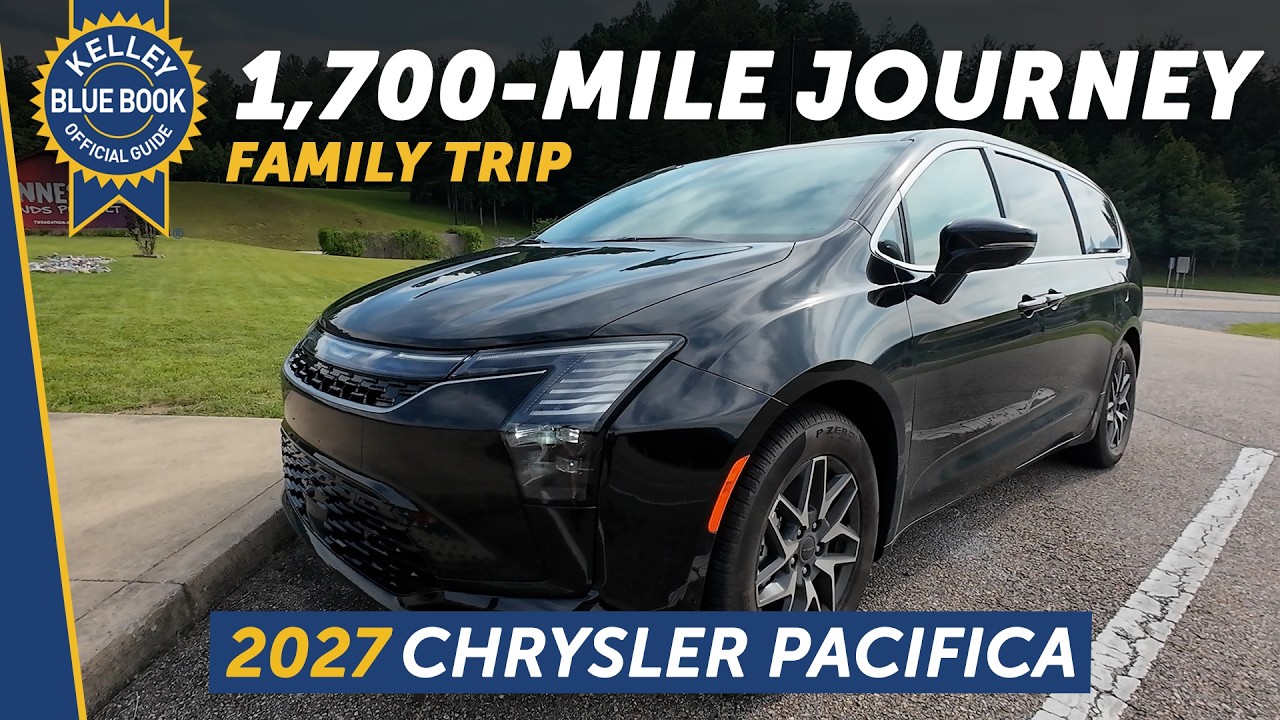
Our Pacifica family road trip began with a fitting bit of minivan déjà vu: an Uber Pacifica pulled into the driveway beside our own van.
Chrysler invited me to take my wife and two daughters, ages 6 and 10, on a road trip in the refreshed 2027 Chrysler Pacifica. We flew from Georgia to Vermont, where a new Pacifica was waiting for us at the airport. From there, the instructions were refreshingly loose: We could keep it for about a week and make our way home however we wanted — highways or byways, direct or meandering.
A direct drive from Vermont to our home in Georgia is roughly 1,200 miles, but we took the long way. I plotted a route around scenery, roadside attractions, and convenient stopping points, supplemented by suggestions from friends. By the time I handed back the keys, I had put about 1,700 miles on the Pacifica.
There was only one immovable deadline: We had to be home on Sunday. My daughters started school Monday morning.
That made every detour a calculation. We had time to wander, but not unlimited time. And we started wandering almost immediately.
Taking the Backroads
After picking up the Pacifica in Burlington, we stayed on the interstate only briefly before turning onto Vermont’s backroads. Before long, we were pulling into a small-town country store for a creemee — Vermont’s version of soft-serve ice cream.
It was exactly the sort of stop I’d hoped this trip would produce. We weren’t trying to cover ground as quickly as possible; we were looking for reasons to get off the main road.
Those roads eventually took us through Smuggler’s Notch, where the pavement twists through the Green Mountains between imposing rock formations. It also gave me my first real chance to settle into the Pacifica.
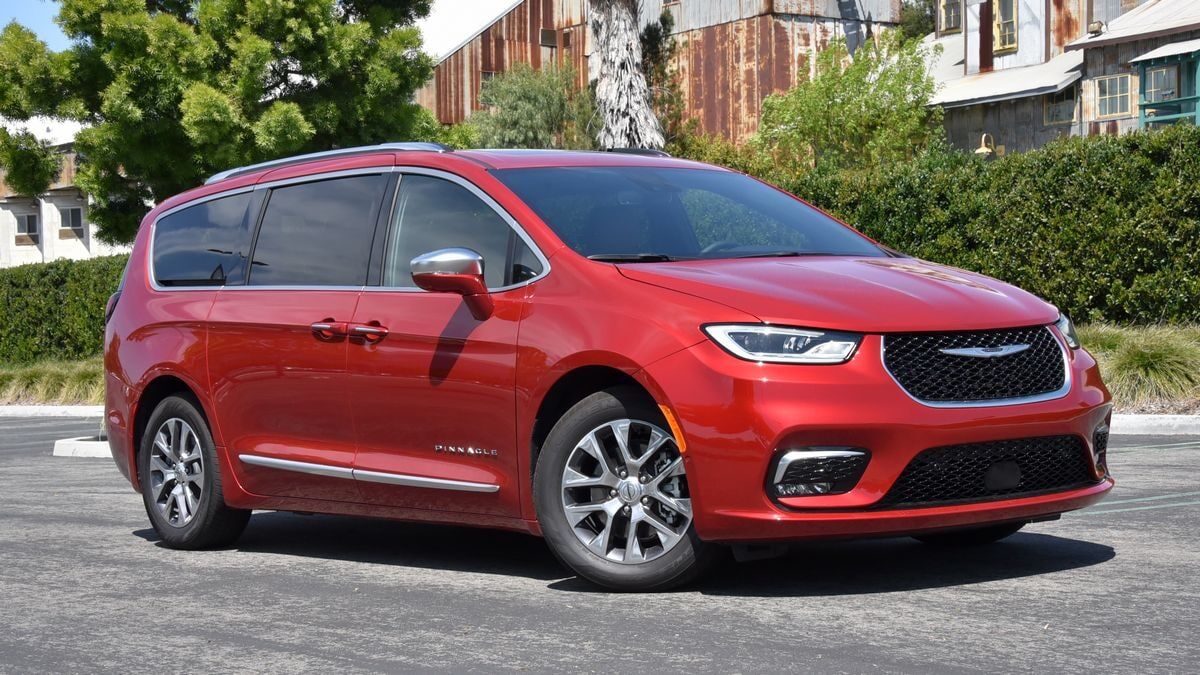
I know the van well. I own a 2022 Pacifica Pinnacle, so I wasn’t approaching the 2027 model as a first-time minivan driver. The first thing I noticed about the refreshed Pacifica was how smooth it felt on the varying pavement, curves, and hills. It was never jarring, shifted well, and didn’t sway on curves.
The girls settled in just as quickly, although our Limited-trim loaner lacked the seatback entertainment system they’re accustomed to in our Pinnacle. That meant, at least occasionally, they actually looked out the windows.
We squeezed in the Ben & Jerry’s Factory Tour in Waterbury and paid respects at its Flavor Graveyard. In Stowe, we took a gondola ride up Mt. Mansfield, Vermont’s highest mountain. Our ride down was delayed when lightning in the area forced the gondola to stop temporarily. It was our first reminder that an itinerary is really just a series of suggestions.
When the Plan Changes
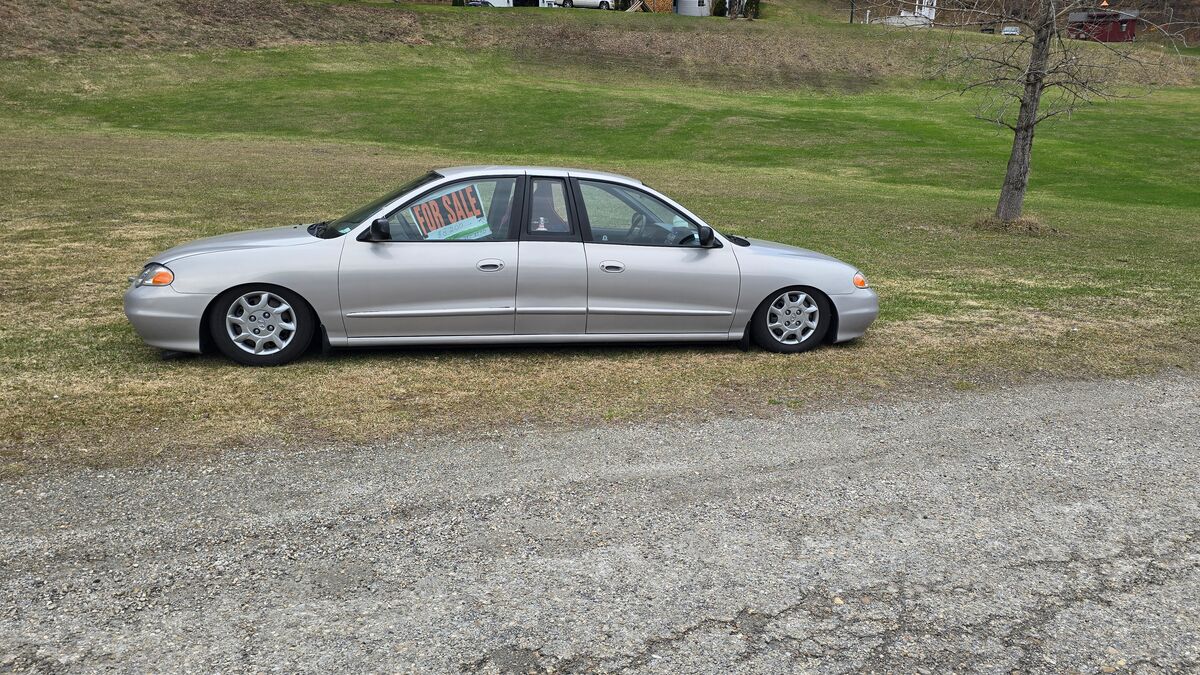
The next morning, we headed south through Vermont along the Green Mountains. Somewhere north of Manchester, we passed one of the trip’s stranger roadside sights: a modified car that appeared to have a front end at both ends.
We continued through Manchester, home to Orvis, the fly-fishing gear and apparel company. I enjoy fly fishing, so a stop at its flagship store was an easy detour before we continued toward Lake George, New York. We planned to spend time around the lake and take a steamboat cruise. Instead, a string of hot summer days gave way to temperatures in the mid-60s and steady rain.
So, we scrapped the plan.
We continued south on U.S. 7, crossed into Massachusetts, and entered New York farther downstate. It wasn’t the day I had mapped out, but the detour worked in our favor. It moved us closer to the next day’s attractions and gave us time to stop at an outlet center for something less adventurous but necessary: shoes for the girls’ first day of school.
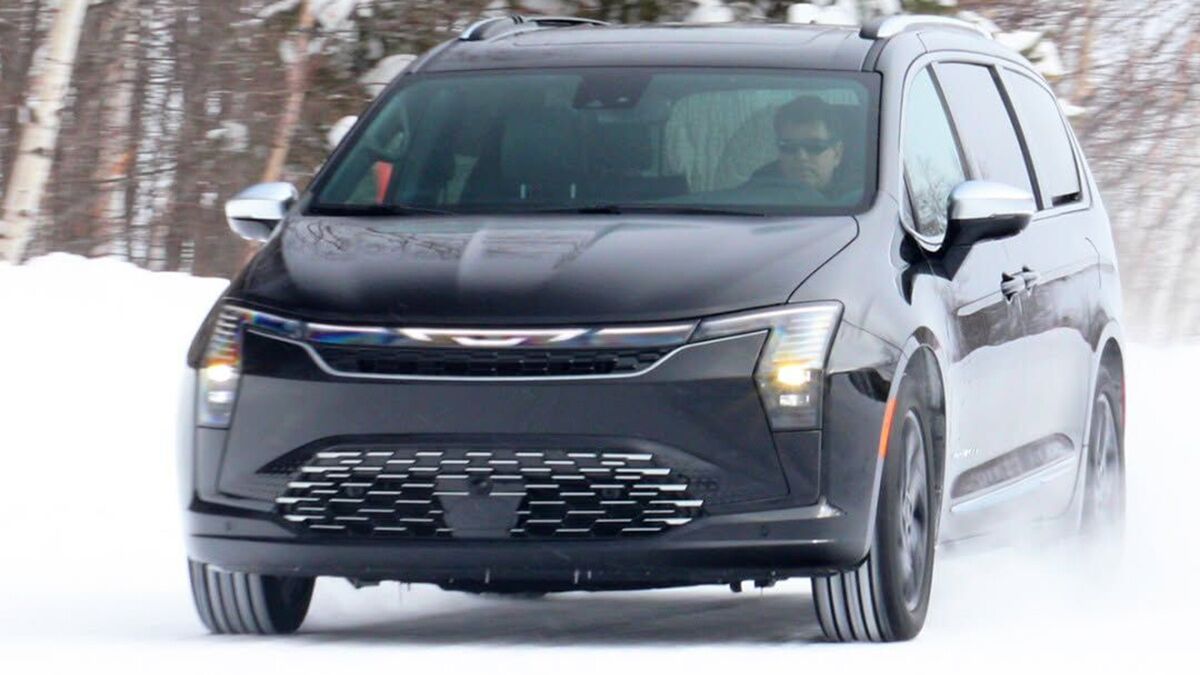
The rain also gave me a different kind of road test. The Pacifica remained composed through everything from drizzle to downpours, and its rain-sensing wipers adjusted without requiring much attention from me.
The Day That Made the Detour Worthwhile
Changing course the day before paid off the next morning.
The day began at a gas station in Newburgh, New York, where a banner advertising Dan D’s Kitchen caught our attention. What really convinced us to step inside, though, was the steady stream of work trucks outside — tree crews, utility workers, plumbers, and others who looked as if they knew where to find a good breakfast.
They did. Inside, a father worked the griddle while his son took orders and kept the place moving. It was one of those road-trip finds that no amount of preplanning can replicate.
From there, we drove through the Delaware Water Gap and hiked to Raymondskill Falls before making a beeline for Jim Thorpe, Pennsylvania. Our earlier detour put us close enough to catch an earlier Lehigh Gorge Scenic Railway departure, where diesel locomotives pull vintage coaches, some dating to 1917, along the Lehigh River through a forested route framed by high-rising cliffs and mountain scenery.
We reserved the caboose, with bench seating, a small booth and table, seats in the cupola, and an open rear platform. We had it to ourselves, except for the car host and conductor, who joined us for the return trip.
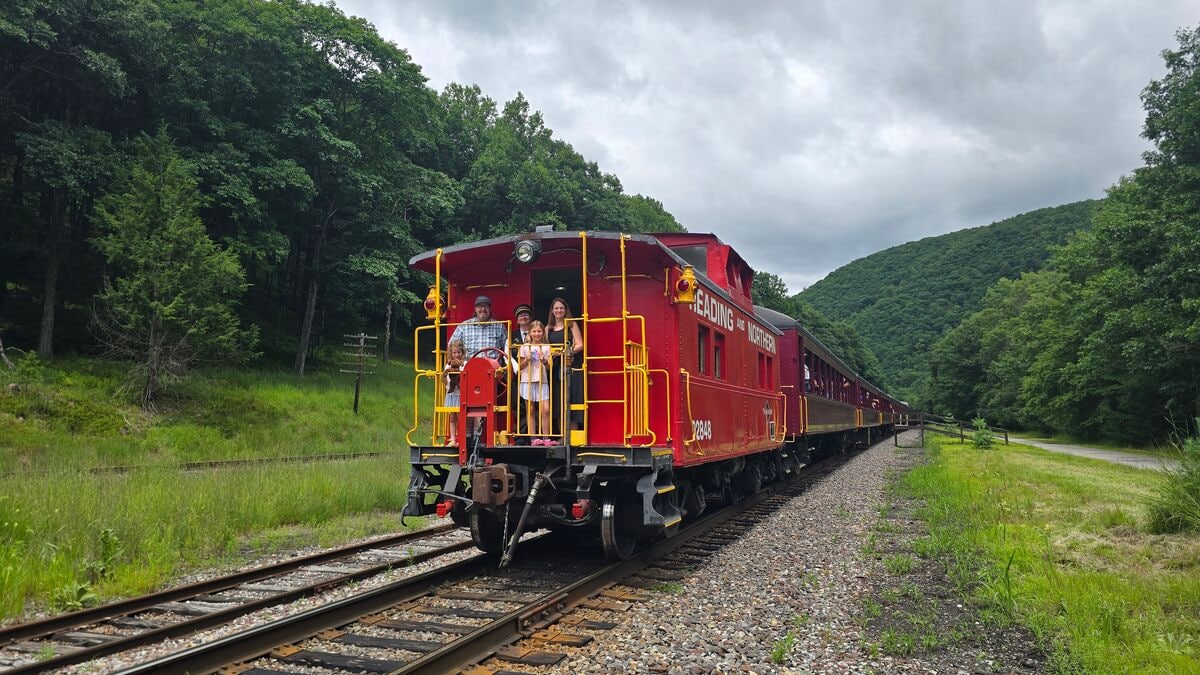
Afterward came doughnuts, more backroads, and a family stop about an hour away. That visit also demonstrated one of the less glamorous advantages of a minivan: space. We were able to load family belongings we hadn’t been able to bring home on previous visits because we had flown. Nearly a decade ago, I used my first Pacifica to bring home a childhood dollhouse that my wife’s grandfather had made for her. Once again, the van made it possible to transport things that would otherwise have been left behind.
Sometimes the Interstate Wins
Not every mile could be a scenic byway.
From Lancaster, Pennsylvania, we grabbed breakfast and road snacks at Central Market and then spent much of the morning on the interstate. We wanted enough time at Luray Caverns in Virginia — and its antique-car museum — while still reaching our hotel in Staunton early enough for the girls to use the pool.
We made it, but the pool was closed for maintenance.
By this point, the only predictable thing about the trip seemed to be the van.
The long stretch of highway gave me a chance to pay closer attention to fuel economy and long-distance comfort. It also produced one of the simplest images of the trip: my wife asleep in the passenger seat while the Pacifica rolled closer to the caverns.
Sometimes, a comfortable passenger napping says more about ride quality than a paragraph of specifications.
Getting Good at Plan B
The next day brought more evidence that the road trip had developed a personality of its own.
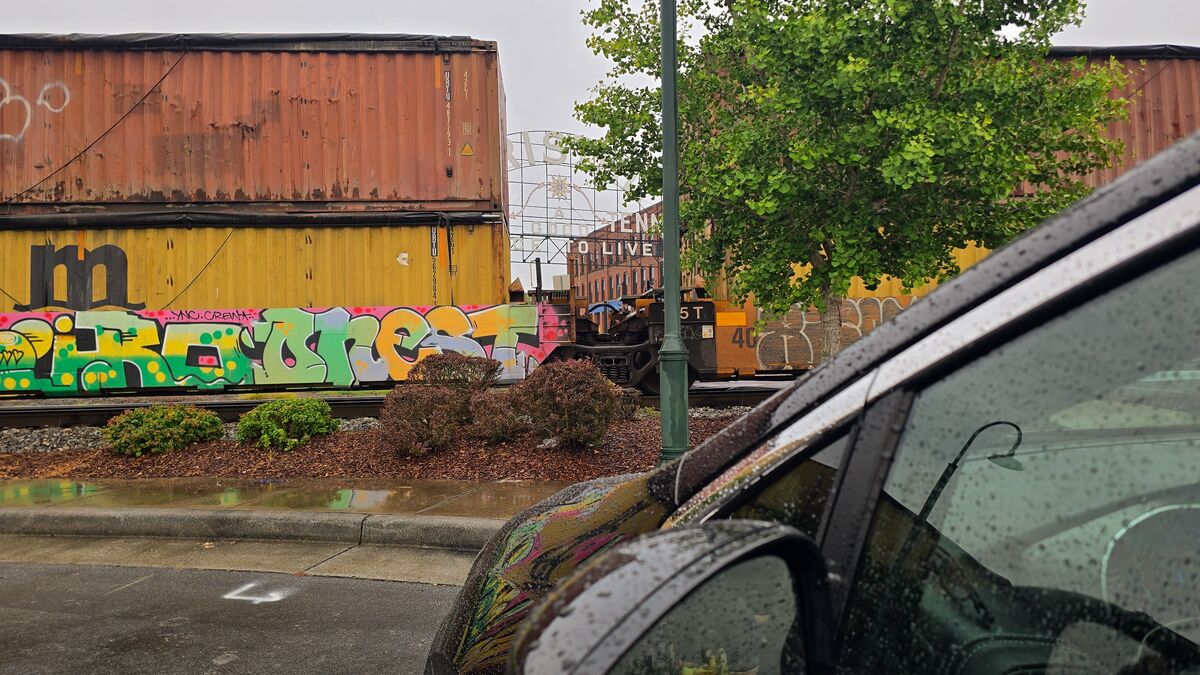
We stopped at Dinosaur Kingdom II for pictures with some of its oversized fiberglass characters, arriving before the kitschy attraction opened. We continued to Natural Bridge, then headed toward Bristol, where we wanted the girls to stand beneath the twin cities’ landmark Virginia-Tennessee sign.
A train had other ideas.
It blocked our access, leaving us with a different family photo: two girls standing in the rain beside a train in the middle of the street.
By then, we had become pretty good at changing plans.
And after days of driving, hiking, sightseeing, rain, and rerouting, the Pacifica remained an easy place to spend hours. That’s the sort of thing that’s difficult to assess on a short test drive but impossible to miss after well over 1,000 miles.
Then, after checking into our hotel outside Asheville, North Carolina, the trip added one more unplanned stop: urgent care for a minor foot issue. Thankfully, everything was fine.
It wasn’t something I’d put on the itinerary, but by then adjustments and improvisation had become part of the routine.
The Long Way Home
Our final day began in Asheville and included one more deliberate but brief detour onto the Blue Ridge Parkway.
The last excursion in the 2027 Pacifica was Chattanooga, Tennessee, stopping along the riverfront and at an old drive-in for burgers and ice cream before turning toward home.
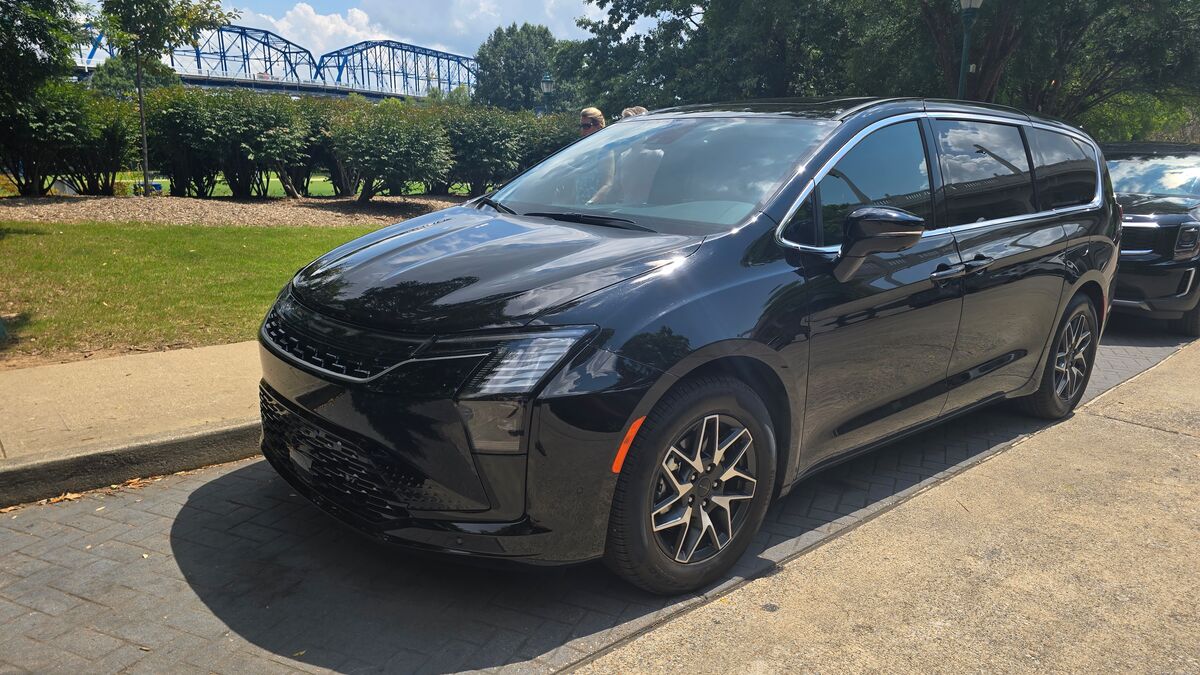
By now, some of the little rituals of the trip had accumulated into memories of their own. The girls had been playing the license plate game along the way. We had driven mountain roads, highways, and small-town streets; encountered heat, cold, and heavy rain; hauled luggage, souvenirs, and family belongings; changed routes; missed attractions; found others we hadn’t planned on; and spent far more time together in a minivan than most vehicle evaluations ever allow.
Over roughly 1,700 miles, the 2027 Pacifica felt like a better version of the van I already know. I wouldn’t be on my second Pacifica if the formula didn’t work for my family, and the refresh preserves its space and versatility while adding a smoother ride, smarter tech, and a more polished cabin. I also consistently saw about 26 mpg with mixed driving.
The trip didn’t go according to plan. In retrospect, that may have been the best part.
We took the long way home — and still made it back in time for school.