

View All Media
2027 Chevrolet Bolt Review

Updated April 13, 2026
Pros
- Affordable
- Fast charging
- Available Super Cruise
Cons
- Few premium options
- No Android Auto/Apple CarPlay
- Jerky at low speeds
What's New?
- Refreshed aesthetics
- NACS charge port
- LFP battery chemistry
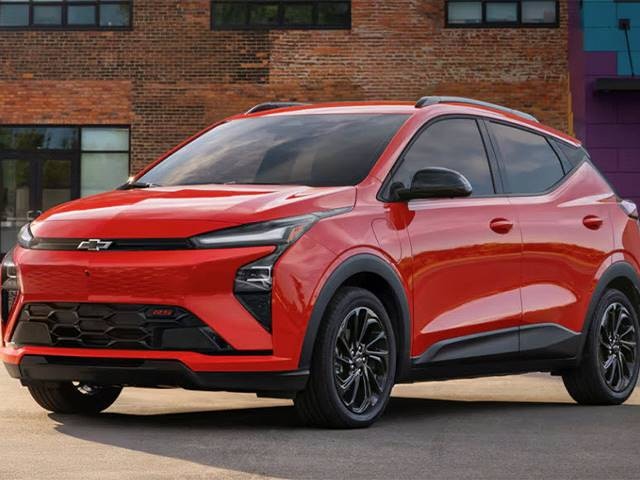
The frugal and high-tech Chevrolet Bolt is back for 2027 as one of America’s most affordable electric vehicles. Pricing starts at $28,995.
The Bolt is a small car, but it’s a big deal. Nearly a decade ago, it helped prove an electric vehicle (EV) didn’t need a luxury badge or luxury-car budget to be usable every day. That matters even more now. After a hiatus brought on by battery drama and its 2023 cancellation, the Bolt returns for 2027 with the same basic mission: a compact electric hatchback with useful cargo room, easy city manners, and pricing that undercuts most of the EV market. Just a few highlights include a 262-mile range, a Tesla-style North American Charging System (NACS) port, and available hands-free driving. This revival also comes with an expiration date, as Chevrolet has already framed the Bolt as a limited-run model before the plant where it’s built moves on to other vehicles.
We’ve spent hundreds of hours driving and evaluating this generation of electric cars, including the Chevy Bolt.
What's New for 2027
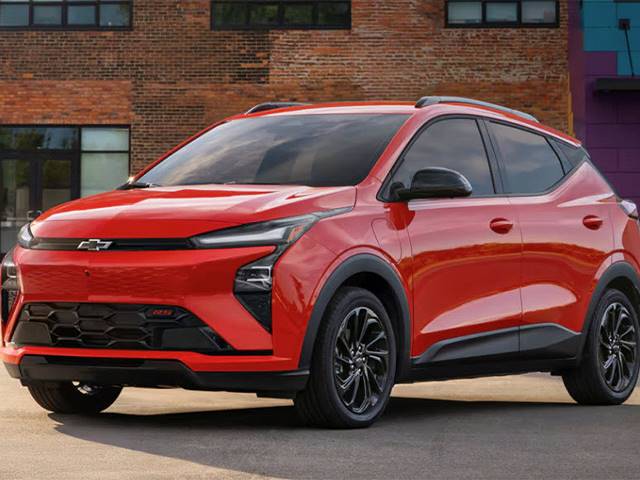
The Chevy Bolt is fully redesigned for the 2027 model year, though it’s a close relative of the Bolt EUV that was discontinued in 2023. The new Bolt features updated aesthetics, a new interior with bigger screens, a native North American Charging System (NACS) charge port, and new battery chemistry that helps keep its cost down.
2027 Chevrolet Bolt Pricing
The 2027 Chevrolet Bolt has a starting sticker price of $28,995, with the range-topping Bolt RS kicking off at $32,995. But Kelley Blue Book Fair Purchase Pricing currently suggests paying $295 to $395 less than MSRP, depending on trim and equipment. These prices are updated weekly.
MSRP | KBB Fair Purchase Price (national avg.) | |||
|---|---|---|---|---|
$28,995 | $28,700 | |||
$32,995 | $32,600 |
The Chevy Bolt LT is the only EV to fully undercut the $30,000 mark after destination fees. The Bolt’s closest rival, the Nissan Leaf, starts at a little over $30k, while slightly bigger electric SUVs like the Chevy Equinox EV and Hyundai IONIQ 5 start in the mid-$30k range.
Before buying a Bolt, check the Kelley Blue Book Fair Purchase Price to know what you should really pay. Historically, the Bolt has offered strong value retention compared to other affordable EVs.
Driving the Chevrolet Bolt
When we drove the Bolt, it quickly reminded us why small EVs still have a lot going for them. Even after gaining about 100 pounds, it remains light by modern EV standards, which helps it feel nimble and easygoing around town. Its compact dimensions make it easy to place in traffic and painless to park.
It also rides better than the previous Bolt, while doing a decent job of keeping road and wind noise in check. But this is still an economy car, and it feels like one. On smooth pavement, it feels agreeable, but on rougher roads, the suspension and road noise remind you where GM cut costs to keep the pricetag down. We say it’s a worthwhile tradeoff.
Steering and brake feel are both decent and forgettable, which is probably the right outcome here. The bigger story is regenerative braking. It’s extremely strong, to the point that “normal” regen makes more sense than the “max” level. The old steering-wheel paddle that manually activated the regenerative brakes is gone, replaced by an on-screen setting, and low-speed one-pedal driving can feel jerky in parking lots and driveways.
Powertrain
| Model | Powertrain | Battery | Horsepower | Max Range/Efficiency |
| All | Single-motor FWD | 65 kWh | 210 hp | 262 miles/120 MPGe combined |
High-Tech Interior
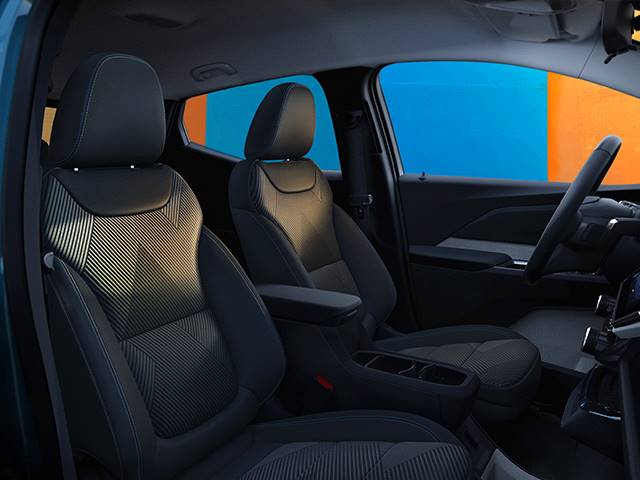
Inside, the Bolt gets a subtle but meaningful glow-up. Material quality is still inexpensive, but it no longer feels cheap and chintzy. The cabin is practical, with creative storage solutions and a more modern dashboard that brings it closer to Chevrolet’s newer products.
An 11-inch driver display and 11.3-inch center touchscreen look much better than before, and physical climate controls remain below the screen. Front-seat comfort is solid for the size and price, and available heated and ventilated front seats add welcome polish. It would be nice to have more upscale options like a premium audio system or real leather seats, but this is a car for the budget-conscious EV shopper.
The interior space is pretty impressive for being one of Chevy’s smallest passenger vehicles. It has 39.1 inches of rear legroom, which is much more than what you get in the Nissan Leaf. Although roomy, the lack of air vents is one small gripe we have about the Bolt’s back seats. Cargo room is respectable, with 16.2 cubic feet behind the back seats and 56.3 cubic feet with the back seats folded down.
Favorite Features
Google Built-In
The Bolt’s infotainment system has Google Built-In, which means handy apps like Google Maps and Google Assistant are built right in. Google Maps is hard to beat for navigation, and we’ve found the voice-controlled Google Assistant to work well for adjusting the audio, changing the car’s temperature, and handling navigation.
Super Cruise
GM’s Super Cruise is one of our favorite semi-autonomous hands-free driving systems, covering more than 600,000 miles of North American highways. Take your hands off when the steering wheel light turns green, keep your eyes on the road, and enjoy a relaxed highway drive. We love to see this available in affordable cars like the Bolt.
NACS port
We always love to see a NACS port, which unlocks access to the expansive Tesla Supercharger network without requiring an adapter. In addition to being able to access more charging stations, the smaller plug is easier for smaller hands to use.
Cars You May Like
We’ve Rounded Up Cars That Could Be Your Perfect Match.
2027 Chevrolet Bolt
KBB.com Consumer Reviews
We don't have consumer reviews for this vehicle.
Be the First to Review This Car2027 Chevrolet Bolt Styles
Calculate Your Budget With These KBB.com Tools
Specifications
Dimensions, Weights & Capacities
Curb Weight | 3776 lbs. | ||
|---|---|---|---|
EPA Passenger | 96.6 cu.ft. | ||
Front Head Room | 40.0 inches | ||
Front Leg Room | 44.3 inches | ||
Max Seating Capacity | 5 | ||
Minimum Ground Clearance | 5.6 inches | ||
Overall Length | 169.6 inches | ||
Front Shoulder Room | 54.6 inches | ||
Trunk or Cargo Capacity | 16.2 cu.ft. | ||
Turning Diameter | 37.7 feet | ||
Wheel Base | 105.3 inches |
Exterior
Alloy Wheels | Available | ||
|---|---|---|---|
Moon Roof/Sun Roof | Available | ||
Number of Doors | 4 doors | ||
Panorama Moon Roof | Available | ||
Roof Rails | Available |
Mechanical
Drivetrain | FWD | ||
|---|---|---|---|
1 speed | Available | ||
Parking Assist System | Available |
Performance
Horsepower | 210 hp | ||
|---|---|---|---|
Torque | 169 foot pounds | ||
Engine | Electric Motor | ||
Estimated Electric Range | 259 miles | ||
Charge Time (240V) | Unavailable hours | ||
Battery Capacity | 65.00 kwh |
Warranty
Basic | 3 years / 36000 miles | ||
|---|---|---|---|
Powertrain | 5 years / 60000 miles | ||
Corrosion | 3 years / 36000 miles |
Comfort & Convenience
Entertainment
Interior
Seating
Technology
2027 Chevrolet Bolt Safety
Safety Features & Technology
Best EVs

More Chevrolet Bolt News & Information
Here are the features, tech, and head-turning design elements on the all new 2027 Chevy Bolt.
The 2027 Chevrolet Bolt is back as GM’s most affordable EV. Here are some of our favorite features and technologies.
FAQs
Is the 2027 Chevrolet Bolt a good buy?
The 2027 Chevrolet Bolt is a good buy for most Electric Vehicle shoppers. It gets strong ratings from our experts and most buyers are paying less than sticker price.
How much should a 2027 Chevrolet Bolt cost?
A 2027 Chevrolet Bolt should cost between $28,700 and $32,600 according to Kelley Blue Book Fair Purchase Pricing.
What's the cheapest Chevrolet Bolt?
The cheapest 2027 Chevrolet Bolt is the LT, with a starting sticker price of $28,995 and a Kelley Blue Book Fair Purchase Price of $28,700.