

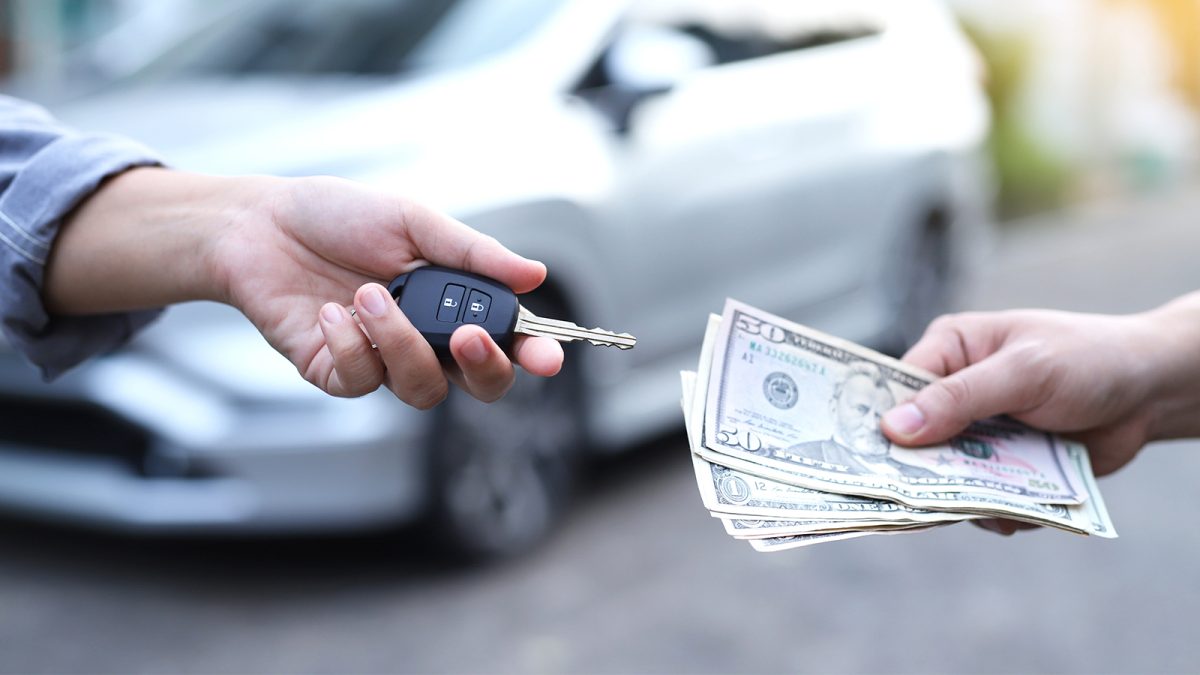
Quick Tips on Exchanging Funds When Selling a Car
- Complete the transaction in a public place, regardless of your payment method.
- Using cash is straightforward but risky, and sales of more than $10,000 require IRS disclosure.
- Digital payment services are convenient, but transaction fees and dollar amount limits might be prohibitive.
Many drivers choose to sell or trade their vehicles to professional dealers, while others prefer to sell privately. If you decide to sell a car on your own, the goal is simple: get paid safely, with funds you can verify.
Depending on the circumstances, the transaction can be stressful and confusing, especially if it’s your first time selling a car. When selecting the best option, consider three things: the sale price, how well you know the buyer, and how quickly you need cleared funds.
We’re outlining common transaction types to ensure the process is smooth and hassle-free. No matter your chosen method, conduct the deal in a public setting for your comfort and safety. Here are the best ways to exchange funds in a car sale.
Quick Decision Guide
- High-dollar amounts and strangers: escrow or an in-branch bank transfer/wire for best fraud protection.
- Mid-dollar: cashier’s/certified check verified at the issuing bank.
- Low-dollar: cash in a public place with bill verification.
Before you take payment
- Meet at a bank lobby or police station safe-exchange location.
- Don’t sign over the title or hand over keys until funds are confirmed.
- Use a bill of sale and keep screenshots and payment confirmation receipts.
- If using a check, verify it directly with the issuing bank. Don’t rely on phone numbers printed on the check.
Cash
Using cash to buy a car is the simplest way to exchange funds. It’s immediate, but it’s also the riskiest for large amounts — both for personal safety and for counterfeit concerns.
Cash: Pros & Cons
| Pros | Cons |
|---|---|
|
|
MORE: How to Sell a Car Without a Title
Bank Transfer
Bank transfers are a secure and efficient way to exchange money in a car sale. They’re best when you want a clear record and bank-level verification, especially for higher prices.
Bank Transfer: Pros & Cons
| Pros | Cons |
|---|---|
|
|
RELATED: How to Sell a Car: 10 Steps for Success
Certified Check
A certified check is a type of personal check that the issuing bank has verified as payable. It can be a good option — if you verify it before completing the sale.
Certified Check: Pros & Cons
| Pros | Cons |
|---|---|
|
|
MORE: Is Now the Time to Buy, Sell, or Trade in a Car?
Cashier’s Check
A cashier’s check is a check issued from the bank’s account. The buyer must pay the bank the full check amount, plus a service fee. From there, the bank issues a check for the requested amount.
Cashier’s Check: Pros & Cons
| Pros | Cons |
|---|---|
|
|
RELATED: How to Sell a Car Online
Escrow Service
An escrow service holds funds until both parties confirm the deal terms. This is one of the safest options for high-dollar private car sales, especially with strangers.
Escrow Service: Pros & Cons
| Pros | Cons |
|---|---|
|
|
MORE: Car Title Guide: Everything You Need to Know
Digital Payment Services
Platforms such as PayPal, Venmo, and Zelle are convenient for everyday transfers. For car sales, the biggest issues are limits, fees, and fraud risks.
Digital Payment Services: Pros & Cons
| Pros | Cons |
|---|---|
|
|
Threat Assessment
The above means of exchanging funds have varying degrees of risk. What matters most is who you’re dealing with, where you’re meeting, and whether funds are verified and settled.
What Is a Trusted Exchange?
In this transaction, the seller and buyer are known to one another. Think of it as a friends-or-family transaction. Risk is generally lower, and most options can work with basic precautions.
What Is an Untrusted Exchange?
An untrusted exchange usually occurs between two strangers. This is where verification steps and safer methods are essential.
Peer-to-Peer Marketplace: Private Seller Exchange
When faced with an untrusted exchange, there is a solution. Verified members can sell and buy cars from private sellers with secure transactions using Autotrader’s Private Seller Exchange. Like Kelley Blue Book, Autotrader is a division of Cox Automotive. The streamlined PSX service is a middleman for buyers and sellers, ensuring the transaction remains secure by vetting participants, facilitating fund transfers, and handling the car title. Buyers may use PSX financing options or submit their payment online via ACH, wire transfer, debit, or credit card. Sellers receive payment the same day or the next business day, depending on when the sale is final.
RELATED: 5 Best Ways to Sell a Car
Sales Tax on Private Car Sales
Who pays sales tax when selling a car privately? The person buying the vehicle. The buyer is responsible for applicable sales tax on a private car sale. It’s typically collected when the vehicle is registered. Consult your tax laws or seek counsel from a tax professional if you need clarification on how this applies to your unique situation.
Get It in Writing
Whichever method you choose to exchange funds in a private car sale, ensure you get everything in writing. Draft a legitimate bill of sale to protect the buyer and the seller and help prevent future misunderstandings or legal disputes. A written agreement for a private car sale provides peace of mind for both parties, making it easier to proceed with confidence.
Our Take
You can’t prepare for every possibility when it comes to scammers and crooks in a car sale. However, with every layer of precaution you add, you reduce the risk. In an untrusted exchange, don’t take anything for granted. Use methods with verifiable, settled funds — and don’t hand over the title until you have them.
RELATED: 7 Ways to Protect Yourself When Selling a Car Privately
Editor’s Note: We have updated this article since its initial publication.